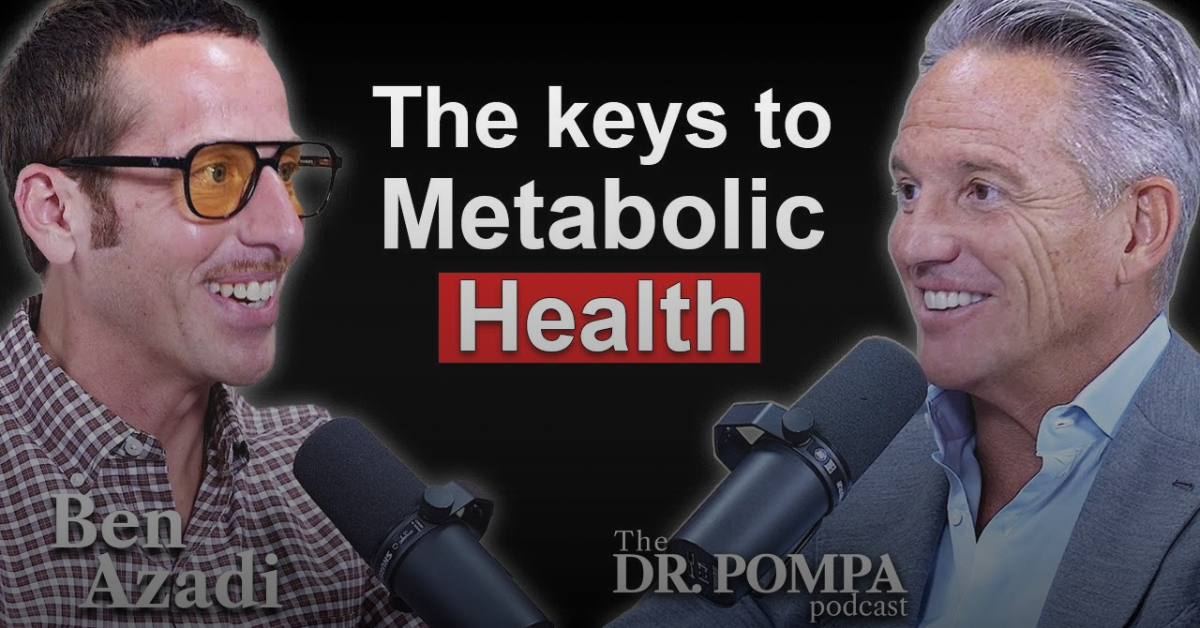
Gratitude, Reversing Genetics, and Getting Unstuck in Your Health Journey With Ben Azadi
Introduction
What if the symptoms you're struggling with today aren't simply the result of bad luck, aging, or genetics?
For years, Ben Azadi believed they were.
At 23 years old, he was overweight, depressed, pre-diabetic, and battling chronic inflammation. He struggled with addictions, lacked direction, and felt trapped in a cycle that seemed impossible to escape. Doctors offered prescriptions, but no one asked deeper questions about his lifestyle, nutrition, environment, or mindset.
Everything changed when he decided to take ownership of his health.
Today, Ben is a New York Times bestselling author, founder of Keto Camp, host of the Metabolic Freedom Podcast, and a leading voice in metabolic health. His journey is a powerful reminder that healing often begins when we stop seeing ourselves as victims of circumstance and start becoming active participants in our own transformation.
From Rock Bottom to a New Beginning
A Childhood Shaped by Unhealthy Habits
Growing up, Ben followed the standard American diet and was surrounded by unhealthy influences.
His parents were divorced, his mother worked multiple jobs, and convenience foods became a normal part of daily life. As he got older, his environment pulled him toward destructive habits. He spent time with drug dealers, used drugs, sold drugs, and developed addictions to sugar, video games, and unhealthy behaviors.
Over time, the consequences caught up with him.
By age 23, he weighed 250 pounds, carried 34% body fat, and dealt with chronic pain, inflammation, high blood pressure, elevated blood sugar, and erectile dysfunction.
Even simple activities became difficult.
He recalls needing knee braces and back support just to walk around a shopping mall.
When Pain Becomes Unbearable
Physically, he was struggling.
Mentally, he was suffering even more.
Ben describes feeling numb, hopeless, and exhausted. He frequently cried, battled depression, and reached a point where he seriously considered ending his life.
What stopped him was a simple thought that repeatedly entered his mind:
“What about your mother?”
That question became the turning point.
Instead of giving up, he began searching for answers.
The Power of Taking Responsibility
One Book That Changed Everything
A close friend handed Ben a copy of The Slight Edge by Jeff Olson.
The book introduced a simple but life-changing idea:
Small daily habits compound over time, either for your benefit or against you.
For the first time, Ben began to understand that his current reality wasn't created overnight. It was the result of years of accumulated choices, habits, and behaviors.
That realization led him into the work of personal development pioneers such as:
- Bob Proctor
- Dr. Wayne Dyer
- Jim Rohn
Their teachings helped him embrace a powerful concept:
Responsibility is your ability to respond to life.
Shifting from Victim to Creator
Like many people, Ben originally blamed his genetics.
His father had diabetes. His family struggled with weight issues. It seemed logical to believe he was simply destined for the same outcome.
Then he encountered a message from Bob Proctor that completely changed his perspective:
“You are the only problem you will ever have, and you are the only solution.”
That idea transformed everything.
Instead of focusing on what had happened to him, Ben began focusing on what he could do next.
That shift became the foundation of his future success.
How Changing His Mind Changed His Body
The Mental Transformation Came First
Many people focus on exercise plans and diet strategies first.
Ben's journey started differently.
Before changing his nutrition, he changed his thinking.
He immersed himself in positive messages, listened to educational recordings daily, and intentionally worked on improving his mindset.
The result wasn't immediate, but it was powerful.
His perspective shifted from hopelessness to possibility.
The Physical Results Followed
As his mindset improved, his actions improved.
He began:
- Exercising regularly
- Cycling and playing basketball
- Reducing unhealthy habits
- Spending less time gaming
- Improving his nutrition
- Pursuing meaningful goals
Within nine months, he lost 80 pounds.
His transformation went far beyond physical appearance.
As he often says, he developed both a physical six-pack and a mental six-pack.
Why Metabolic Health Matters More Than Ever
The Hidden Crisis Behind Modern Disease
One of Ben's core messages is that metabolic dysfunction sits at the center of many chronic health problems.
Despite spending trillions of dollars annually on healthcare, rates of obesity, diabetes, and chronic illness continue to rise.
According to Ben, many people are treating symptoms while overlooking root causes.
The challenge isn't simply blood sugar.
It's metabolic dysfunction.
It's cellular inflammation.
It's insulin resistance.
Insulin Resistance Often Starts Years Before Diabetes
One of the most important points Ben emphasizes is that diabetes doesn't appear overnight.
Long before blood sugar levels become abnormal, insulin resistance may already be developing.
In many cases, this process begins six to fourteen years before a diabetes diagnosis.
That means many people may be metabolically unhealthy while standard lab work still appears “normal.”
Key Markers to Watch
Ben encourages people to pay closer attention to metabolic health indicators such as:
- Fasting insulin
- Hemoglobin A1C
- Fasting glucose
- Continuous glucose monitoring
Rather than waiting for disease to develop, these markers can provide early warning signs that intervention is needed.
Why Diet Alone Isn't Always Enough
The Missing Piece: Toxicity
After losing weight and improving his lifestyle, Ben expected to feel amazing forever.
Instead, years later, many symptoms returned.
He experienced:
- Fatigue
- Brain fog
- Bloating
- Weight gain
- Poor recovery
At first, the situation made no sense.
He was exercising, fasting, eating a ketogenic diet, and taking supplements.
Eventually, he discovered another factor influencing his health: toxic burden.
Hidden Sources of Stress
Ben identified several major contributors, including:
- Mercury-containing dental fillings
- Mold exposure
- Heavy metals
- Environmental toxins
Addressing those underlying stressors became a critical part of his healing journey.
The experience reinforced an important lesson:
Diet matters, but sometimes deeper issues must be addressed before lasting health can be restored.
Understanding Ketosis and Metabolic Flexibility
Keto Is a Metabolic State, Not Just a Diet
One of the most common misconceptions about keto is that it's simply a way of eating.
Ben explains that ketosis is actually a natural metabolic process.
When carbohydrate intake is low or food is unavailable, the body begins using stored fat for fuel.
That process creates ketones, which provide energy for the brain and body.
Humans have been entering ketosis naturally throughout history.
Benefits of Becoming Fat Adapted
When the body becomes efficient at using fat for fuel, many people experience:
- Improved energy
- Better mental clarity
- More stable blood sugar
- Reduced hunger
- Improved metabolic flexibility
According to Ben, the goal isn't to stay in ketosis forever.
The goal is to develop the ability to move between fuel sources efficiently.
Why Diet Variation Matters
Avoiding Dietary Extremes
One of the most refreshing aspects of Ben's philosophy is his emphasis on flexibility.
Rather than permanently committing to one dietary camp, he encourages strategic variation.
This may include periods of:
- Ketogenic eating
- Higher carbohydrate intake
- Fasting
- Feast days
- Carnivore approaches
- Seasonal adjustments
The objective is to support adaptation rather than rigidity.
Metabolic Freedom Means Flexibility
True metabolic health isn't about becoming dependent on a single eating style.
It's about developing the ability to thrive under different conditions.
That's what Ben calls metabolic freedom.
The Carnivore Diet as a Therapeutic Tool
Why Some People Feel Better on Carnivore
Ben views carnivore as a powerful short-term strategy, particularly for people dealing with autoimmune conditions or severe inflammation.
By removing plant compounds that some individuals react to, inflammation may temporarily decrease.
Benefits often include:
- Reduced digestive symptoms
- Less bloating
- Improved energy
- Better sleep
- Fewer autoimmune flare-ups
The Goal Isn't Permanent Restriction
While carnivore can be incredibly useful, Ben doesn't view it as the final destination.
Instead, he sees it as an elimination strategy that creates an opportunity to heal.
Once underlying issues are addressed, foods can often be reintroduced strategically.
The Science of Hormesis: Why Stress Can Make You Stronger
Not All Stress Is Bad
One of the most important concepts discussed in the conversation is hormesis.
Hormesis describes how appropriate amounts of stress can strengthen the body.
Examples include:
- Exercise
- Fasting
- Sauna therapy
- Cold exposure
- Dietary variation
The key is finding the right dose.
Too little stress creates weakness.
Too much stress creates damage.
The sweet spot is adaptation.
Applying Hormesis to Real Life
Ben shares his experience using cold plunges despite having Raynaud's syndrome.
Rather than avoiding cold entirely, he gradually increased exposure over time.
As his body adapted, symptoms improved.
The lesson applies far beyond cold therapy.
Growth often happens when we challenge ourselves appropriately rather than avoiding discomfort completely.
The Most Powerful Supplement Isn't Found in a Bottle
Introducing “Vitamin G”
Near the end of the conversation, Ben discusses what he jokingly calls Vitamin G.
It isn't sold in stores.
It doesn't require a prescription.
And according to the research he references, it may have profound effects on health.
Vitamin G is gratitude.
Why Gratitude Matters
Ben explains that gratitude isn't simply a mental exercise.
It's an emotional state that can influence physiology.
Research has linked gratitude practices with improvements in:
- Stress resilience
- Emotional well-being
- Cardiovascular health
- Immune function
- Overall quality of life
More importantly, gratitude changes what we focus on.
And what we focus on often expands.
Finding Purpose in Pain
Ben's passion for metabolic health is deeply personal.
His father spent years battling type 2 diabetes and ultimately died from its complications.
For a long time, that experience left him angry, confused, and heartbroken.
Eventually, it gave him something else.
Purpose.
Today, helping people reverse metabolic dysfunction has become his life's mission.
The pain that once felt overwhelming became the foundation for meaningful work that impacts countless lives.
Conclusion
Ben Azadi's story isn't just about losing weight or improving blood sugar.
It's about reclaiming ownership.
It's about understanding that while we can't always control what happens to us, we can control how we respond.
His journey reminds us that transformation begins with responsibility, grows through consistent action, and often emerges from life's most difficult challenges.
If there's one message that stands out above all others, it's this:
The path from pain to purpose starts when we stop waiting for someone else to save us and begin taking ownership of our own health, mindset, and future.