
The UFC Lie: Dana White Said Women Would NEVER Fight… Until THIS Happened
Introduction
Most people know Miesha Tate as a UFC champion, a fierce competitor, and one of the pioneers of women's mixed martial arts. But behind the championship belts, legendary rivalries, and unforgettable fights is a deeper story about resilience, self-discovery, and learning who you are beyond your accomplishments.
In this candid conversation, Tate reflects on her unlikely path into combat sports, the setbacks that shaped her, and the lessons she learned from chasing success at the highest level. Her journey reveals that true strength isn't just about enduring pain—it's about continuing forward when every part of you wants to stop.
From an Ordinary Childhood to an Extraordinary Path
Looking back, Tate doesn't point to a single childhood moment that predicted her future as a fighter. She describes herself as a kind, inclusive child who was taught by her mother to look out for others, especially those who felt left out.
Yet beneath that calm exterior were experiences that quietly shaped her character.
She speaks openly about feelings of abandonment connected to her biological father and later the difficult relationship she had with her stepfather during her teenage years. While she didn't see those experiences as defining her at the time, she later recognized how they influenced her search for strength and identity.
Discovering Wrestling by Accident
Tate didn't set out to become a fighter.
In high school, a friend suggested they try wrestling simply because neither of them played basketball and there weren't many other sports options available. What began as a casual decision quickly became transformative.
Wrestling awakened something inside her.
It taught her that hard work produces results. More importantly, it showed her that people's perceptions can change. The same teammates who initially doubted she belonged eventually respected her dedication and growth.
Learning to Compete in a World That Didn't Expect You to Succeed
As one of the few girls wrestling against boys, Tate faced skepticism from the beginning.
She recalls being treated as if she didn't belong. Most of the boys assumed girls simply couldn't compete at the same level. Rather than allowing that perception to define her, she used it as motivation.
Over time, she learned to study what made her opponents effective. Instead of focusing on limitations, she focused on closing the gap.
That experience taught her an important lesson:
Hard Work Changes Perception
People may form opinions about you quickly, but those opinions are not permanent.
Through consistent effort, discipline, and improvement, Tate discovered that first impressions don't have to become permanent labels.
That lesson would follow her throughout her career.
The Unexpected Beginning of an MMA Career
Ironically, Tate initially had no interest in getting punched.
When a friend convinced her to attend an MMA class, she was far more interested in grappling and submissions than striking. Learning Brazilian jiu-jitsu fascinated her. Punching, on the other hand, seemed completely unnecessary.
That perspective changed after attending her first amateur MMA event.
For the first time, she saw the strategy, skill, and artistry behind the sport. What many people viewed as chaos, she saw as a complex chess match unfolding in real time.
Soon after, she stepped into the cage herself.
The Fight That Changed Everything
Tate's first amateur fight ended in defeat.
After only a few weeks of striking experience, she found herself facing an accomplished kickboxer. Early success quickly turned into adversity when a devastating knee strike broke her nose.
Blood poured from her face. Her corner eventually stopped the fight.
Most people assumed the experience would convince her never to return.
Instead, the opposite happened.
Discovering Something Deeper
In the middle of pain, fear, and uncertainty, Tate discovered a side of herself she hadn't known existed.
Even after suffering a broken nose, she found herself fighting back aggressively and regaining momentum. Although the fight was stopped, she left with a new understanding of her own resilience.
Rather than discouraging her, the loss ignited a desire to improve.
She didn't see failure.
She saw potential.
The Power of Starting at the Bottom
One of the recurring themes throughout Tate's journey is her willingness to begin as a beginner.
She lost her first wrestling match.
She lost her first MMA fight.
She was frequently underestimated.
Yet she never viewed those moments as reasons to quit.
Instead, she treated them as opportunities to learn.
The “Cupcake” Who Refused to Fit the Stereotype
Because of her appearance and personality, opponents often underestimated her. Some viewed her as too soft, too feminine, or too nice to be dangerous.
The nickname “Cupcake” emerged from those assumptions.
At first, it irritated her.
Eventually, she embraced it.
Rather than trying to change who she was, Tate allowed her performance to challenge people's expectations.
She learned that strength and femininity are not opposites.
The Rivalry That Helped Change Women's MMA
No discussion of Miesha Tate's career is complete without mentioning her rivalry with Ronda Rousey.
At a time when many doubted women's MMA had enough depth or talent to belong in the UFC, Tate believed otherwise.
She remembered what wrestling had already taught her: perceptions can change.
While UFC President Dana White publicly questioned whether women's MMA belonged in the organization, Tate believed that once people saw the right fights, minds would change.
Eventually, they did.
The rivalry between Tate and Rousey became one of the defining stories that helped bring women's MMA into the mainstream.
Fighting Through a Broken Arm
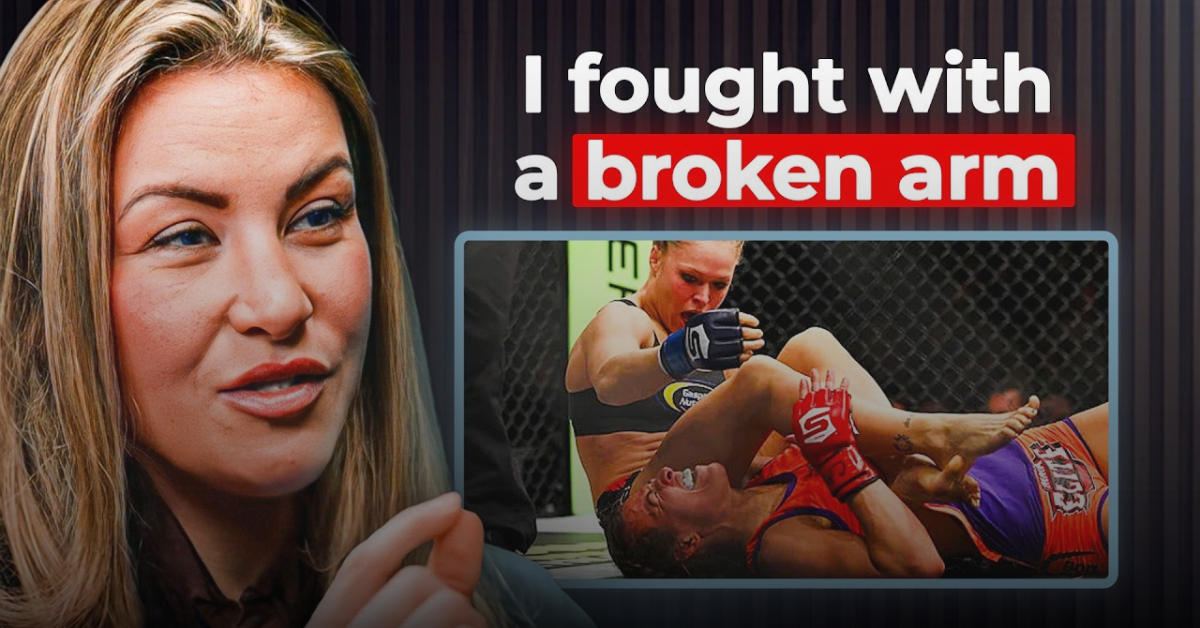
One of the most iconic moments of Tate's career came during her fight with Rousey.
Caught in an armbar, Tate refused to submit.
As the pressure increased, the damage became severe. Ligaments tore. Tendons pulled away from the bone. Her elbow hyperextended dramatically.
Still, she wouldn't tap.
Why She Didn't Quit
Asked why she kept fighting, her answer was simple:
She didn't want to give up.
She didn't want to lose.
That mindset became one of the defining characteristics of her career—not because it guaranteed victory, but because it revealed who she was under pressure.
The performance earned widespread respect and helped convince UFC leadership that women belonged on the sport's biggest stage.
Becoming UFC Champion
After setbacks, losses, and years of perseverance, Tate eventually captured the UFC championship by defeating Holly Holm.
The victory reflected the entire story of her career.
She faced adversity during the fight. She fell behind. She had moments where things weren't going her way.
But she continued pressing forward.
In the final round, she took a calculated risk, secured a chokehold, and finished the fight dramatically to become champion.
It was the culmination of years of persistence and belief.
The Surprising Truth About Success
Perhaps the most powerful lesson from Tate's story came after she achieved her biggest goal.
For years, she believed becoming champion would finally make her happy.
When it happened, the excitement was real—but temporary.
Within weeks, she realized something important:
Success and happiness are not the same thing.
Looking Beyond Achievement
Tate recognized that she had tied much of her identity to being a fighter, a winner, or a champion.
When achievement becomes your entire identity, it creates a problem. No accomplishment can permanently fill deeper emotional needs.
She came to understand that purpose is found through connection:
- Connection with yourself
- Connection with others
- Connection with something larger than achievement
The championship was meaningful, but it wasn't the answer she thought it would be.
The Mindset That Never Quits
When asked what allowed her to keep moving forward through injuries, losses, and disappointments, Tate offered a simple perspective:
Sometimes you stop giving yourself another option.
You decide there is only one direction—forward.
That doesn't mean the journey is easy. It doesn't mean fear disappears. It means committing so fully that quitting no longer feels like a viable path.
Conclusion
Miesha Tate's story is about far more than fighting.
It's about discovering strength through adversity, refusing to let other people define your potential, and learning that achievement alone cannot create fulfillment.
Her journey reminds us that resilience isn't something you're born with. It's something you develop every time you face difficulty and choose to keep going.
And perhaps the most valuable lesson of all: success may open doors, but true fulfillment comes from knowing who you are when the applause fades.